Project:
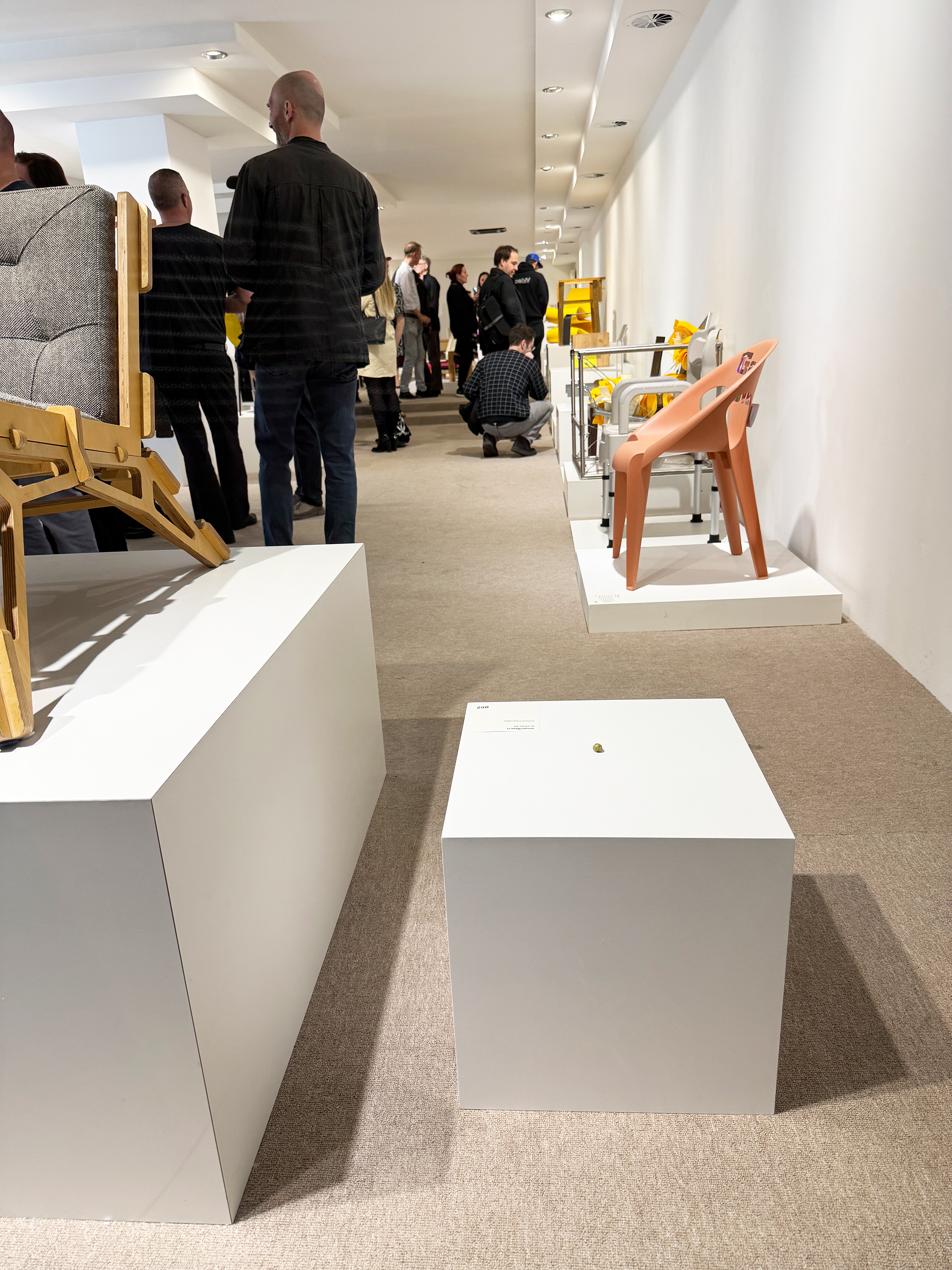
Chair of a Bean Counter
Year:
2026
Exhibition:
SITZEN MACHEN!
Exhibition venue:
Deutsches Design Museum, Berlin
April 18 – May 30, 2026
Sensitivity in design does not manifest in overt gestures, but in subtle transitions between material, body, and perception. Nowhere is this more evident than in the design of chairs: sitting is not a static condition, but a complex interplay of pressure, relief, and expectation. A chair is therefore always an interface between the human body and the world.
The fairy tale of The Princess and the Pea serves as a precise metaphor for this inquiry. The princess’s extreme sensitivity points to an understanding of comfort that goes beyond the mere absence of discomfort, encompassing instead the ability to perceive even the smallest deviations. Comfort thus becomes relative: it is not the objective qualities of a seat that matter, but the relationship between body and object.
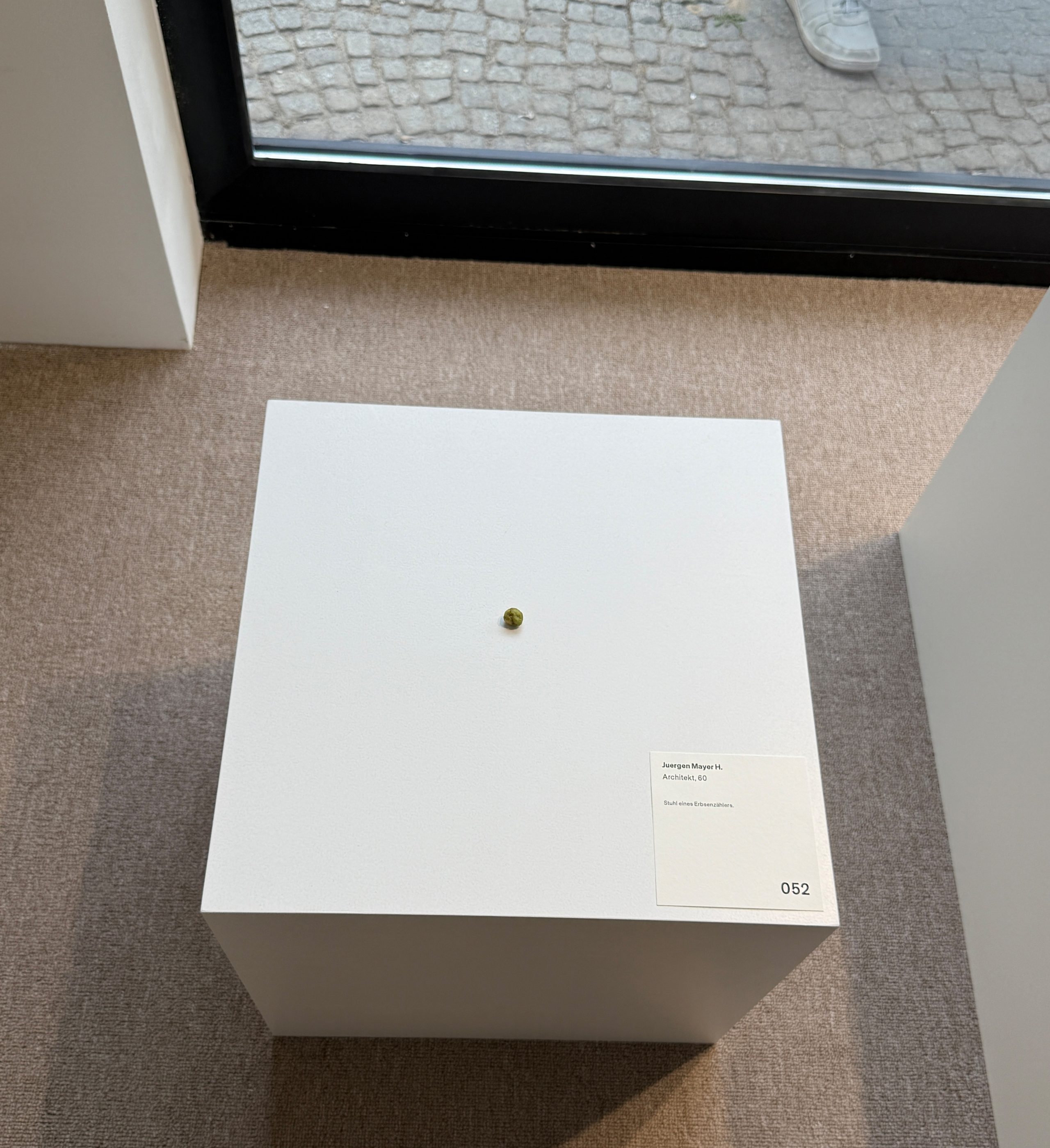
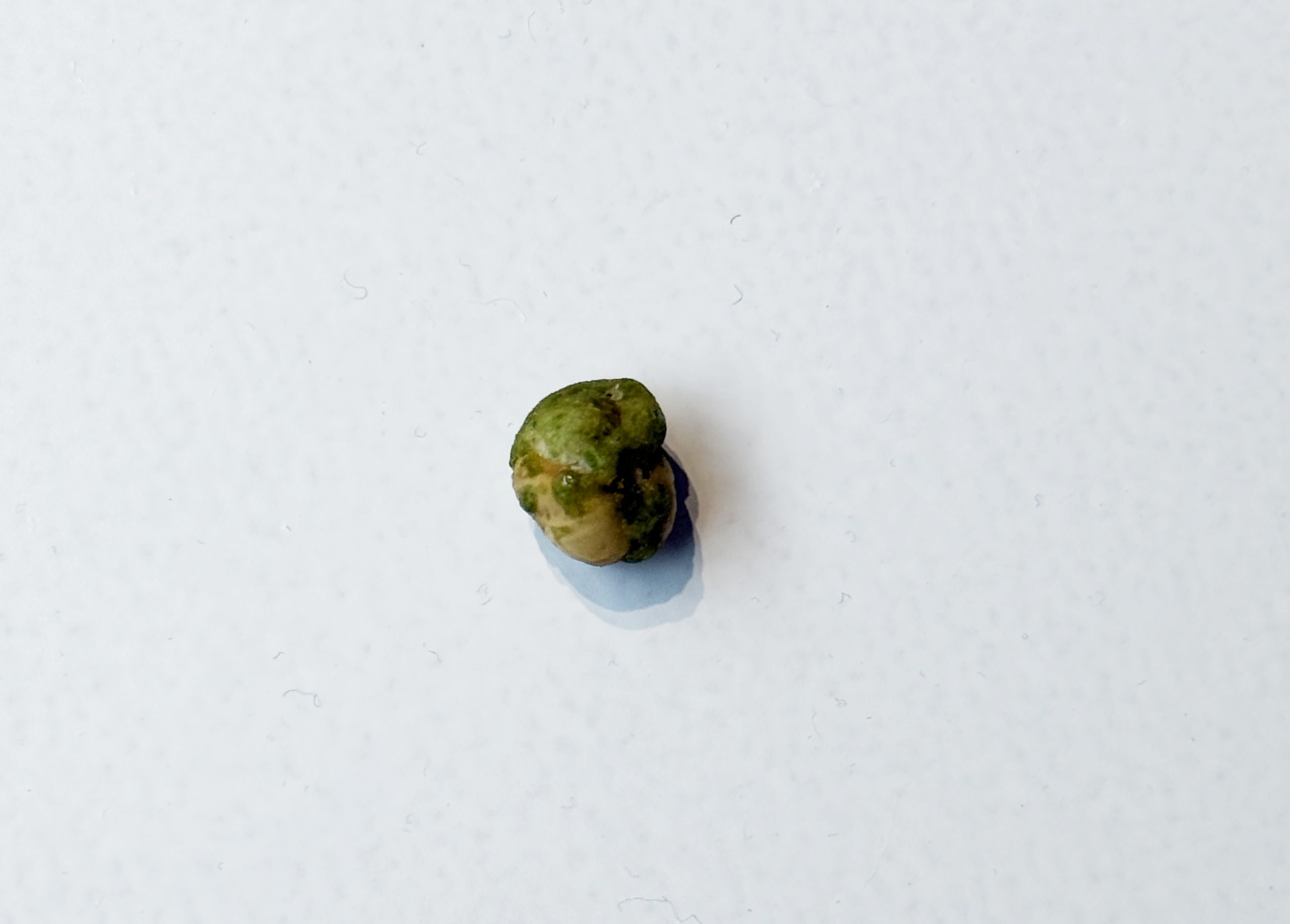
The “Chair of a Bean Counter” radicalizes this idea. Conceptually consisting of a single wasabi pea, it rejects any conventional functionality. Rather than serving as a usable object, it operates as an idea—an object that simultaneously asserts and negates the act of sitting. The choice of a wasabi pea intensifies this notion: its sharpness represents an active, almost aggressive form of sensitivity that pushes perception toward irritation.
The term “bean counter” itself carries a double meaning, describing a pedantic, overly meticulous person. This figure mirrors the princess, whose sensitivity is valued positively in the fairy tale but often perceived as bothersome in everyday life. The design plays with this ambivalence, raising the question of whether comfort resides in the object or in the attitude of the user. In doing so, it exposes comfort as a cultural promise rather than a fixed condition.
At the same time, the concept addresses the invisibility of many design decisions. While in the fairy tale the pea remains hidden yet effective, the design reverses this principle: the pea is fully visible, while its function is rendered absurd. This reduction can be read as a critique of the over-optimization of comfort. In a world of increasing cushioning and technological refinement, this minimal gesture appears as a deliberate counterproposal.
The wasabi pea acts as a disruption that forces reflection. The chair becomes not a utilitarian object but a conceptual one: it reveals the conditions of comfort by subverting them. Sensitivity here appears less as an ergonomic quality than as an attitude toward perception.
An additional layer of meaning emerges from the word “chair” itself. In German, Stuhl also refers to bowel movement. This ambiguity shifts the perspective from external sitting to internal bodily processes. The pea is thus not only imagined as a seat, but also as something ingested and processed by the body. Perception and physiology merge into a cycle of stimulus, processing, and excretion.
For the “bean counter” as a figure of control, this introduces an ironic twist: one who counts can miscount—and the body becomes the final instance of correction. The claim to precision meets its limits, as bodily processes cannot be fully controlled. Stability (the chair as object) encounters process (the bodily function).
The design ultimately points to the close interrelation of object, body, and language. Comfort no longer appears as an isolated property, but as part of a broader system of perception and processing. The “Chair of a Bean Counter” demonstrates that design does not merely provide solutions—it also poses questions, particularly where sensitivity, control, and irritation intersect.
Partner in Charge:
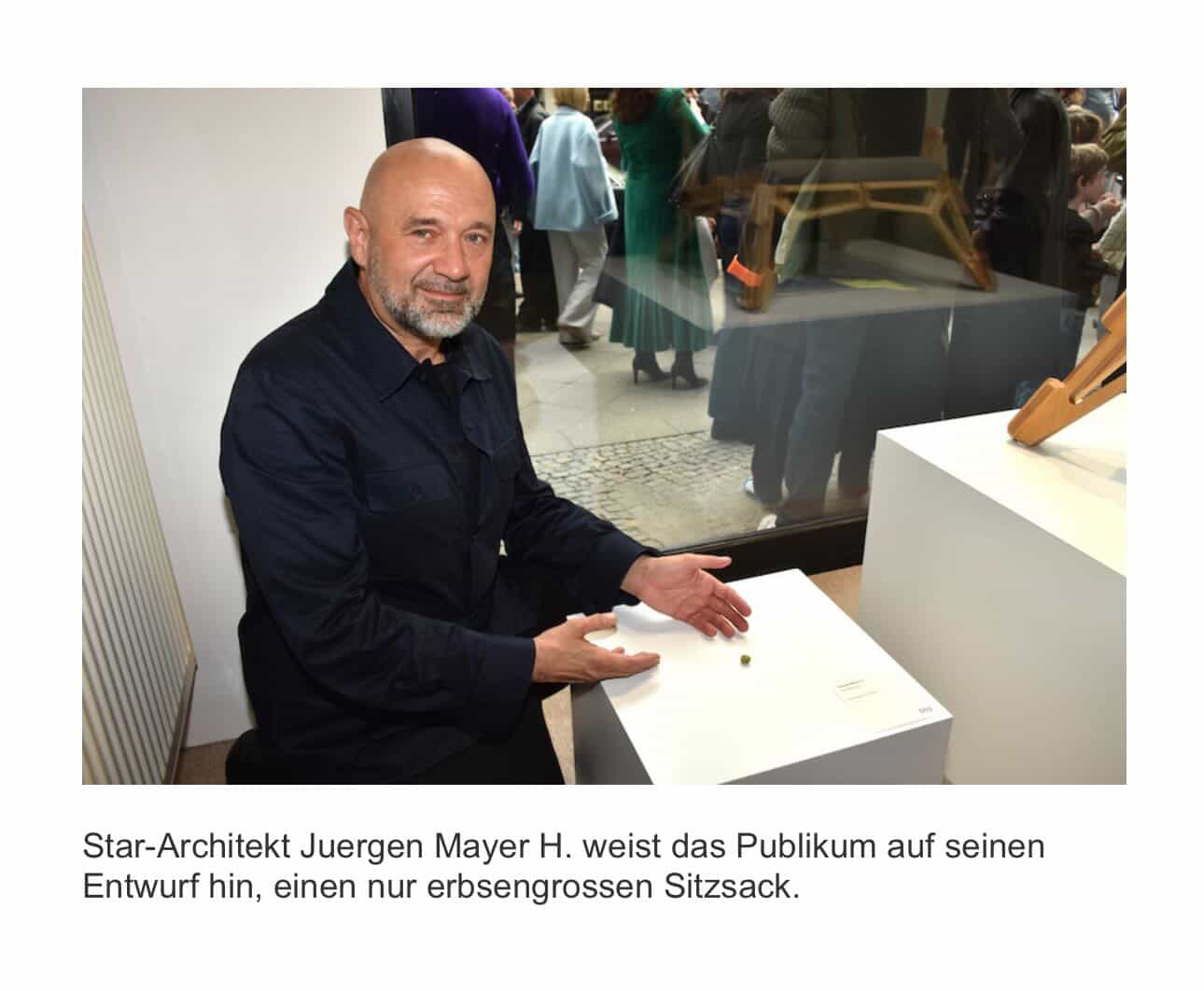
Jürgen Mayer H.